2 Apr 2026
UK Remote Gaming Duty Soars to 40%: Operators Warn of Black Market Surge and Market 'Spiral Effect'

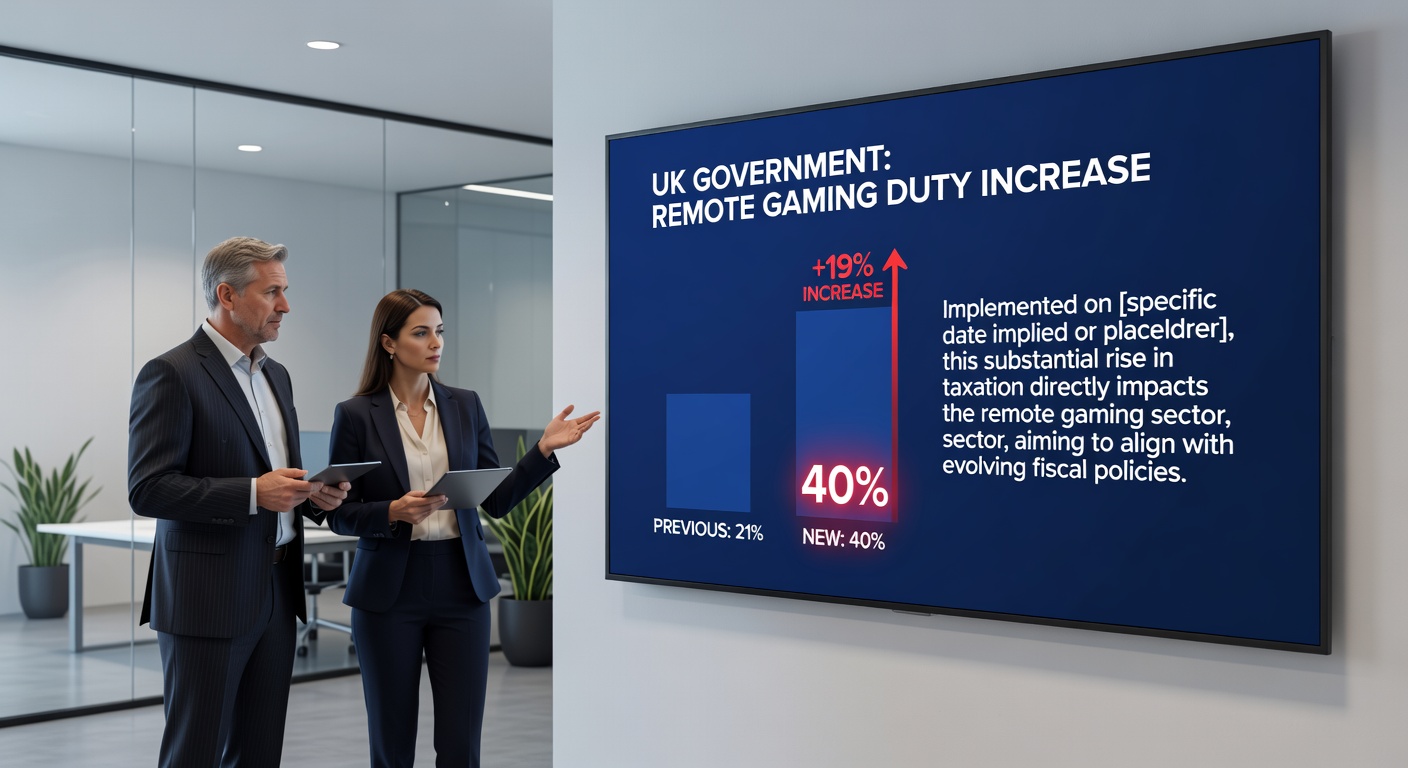
The UK government, through Chancellor Rachel Reeves, unveiled a major overhaul to gambling taxes, pushing the Remote Gaming Duty on online casino revenue from 21% up to 40%, a change set to kick in on April 1, 2026; this move targets UK-licensed online operators specifically, reshaping the landscape for digital slots, roulette, blackjack, and other remote games that players access via apps and websites. According to official publications from the Treasury, the hike aims to align duties more closely wth onshore gaming taxes while capturing a larger share of the booming online sector's profits, which have grown steadily amid rising player participation.
What's interesting here is how this adjustment zeroes in on remote gaming—think online casinos—leaving other gambling verticals like sports betting partially untouched at lower rates, although broader duty changes ripple across the industry; data from government announcements reveal the Remote Gaming Duty previously sat at 21% for operators holding UK Gambling Commission licenses, but now that threshold jumps sharply, potentially squeezing margins that have already faced scrutiny from regulators and economic pressures.
The Announcement Breakdown: What Changed and Why Now
Chancellor Reeves laid out the details in recent fiscal updates, confirming the 40% rate applies directly to gross gambling yield from online casino activities for licensed firms; this isn't a blanket tax rise across all betting, since remote sports betting duties hold at 15% for bets placed remotely but settled onshore, creating a tiered system where casino-style games bear the heaviest burden. Figures from the government's gambling duty changes document outline the mechanics, showing how the policy closes perceived loopholes in offshore operations while ensuring UK-facing sites contribute more substantially to public coffers.
And yet, observers note the timing aligns with broader budget strategies, coming as online gambling generates billions in gross gaming yield annually—£4.3 billion in the latest quarterly stats alone—prompting questions about sustainability for operators already navigating affordability checks and stake limits. Take the mechanics: under the new structure, a site pulling in £100 million from online slots and tables would owe £40 million in duty versus £21 million before, a difference that stacks up quickly for high-volume players; experts tracking these shifts point out how such escalations have precedents in other jurisdictions, like Australia's point-of-consumption taxes, but the UK's jump stands out for its scale.
Now, with implementation looming just over a year away, licensed operators face a countdown to adapt, whether through pricing tweaks, game adjustments, or relocation considerations, although moving offshore risks losing UK market access entirely.
Industry Backlash: Betting and Gaming Council Sounds the Alarm
The Betting and Gaming Council (BGC), representing major UK gambling firms, fired back swiftly, warning that the tax spike could drive billions in wagers underground to unregulated black market sites offering juicier odds and no tax pass-through; in their pointed commentary titled "April Fools? There’s nothing funny about billions being staked on the black market", BGC leaders highlighted how punters might flock to unlicensed platforms, already a growing concern given estimates of £1.5 billion wagered illicitly each year. Data indicates black market activity has simmered at the edges, fueled by sites evading UK protections like age verification and problem gambling tools, but this duty hike, they argue, pours fuel on that fire.
Here's where it gets interesting: BGC reports show unregulated operators luring UK players with bonuses up to 500% and odds unburdened by 40% taxes, creating a magnetic pull for cost-conscious bettors; one case they cite involves offshore mirrors of popular slots, where players report faster payouts minus the regulatory friction, although such sites often vanish with winnings or expose users to data breaches. Those who've studied migration patterns in places like Sweden after similar hikes observe player shifts of 20-30% to grey markets, a trend BGC fears could repeat here on steroids.
But the council doesn't stop at warnings; they emphasize how regulated sites invest heavily in safer gambling—£200 million last year alone on tools like deposit caps and self-exclusion—efforts that black market rivals simply ignore, leaving vulnerable players exposed while tax revenue ironically dips as activity flees licensed channels.
Operator Responses: The 'Spiral Effect' Takes Shape
Evoke, the parent company behind sites like William Hill and Mr Green, emerges as a prime example of how firms might counter the squeeze, with insiders revealing plans for slashed marketing budgets and staff cuts to offset the 19% duty gap; reports from CDC Gaming detail this 'spiral effect', where reduced ad spend means fewer new players, thinner liquidity for promotions, and ultimately lower yields that still get taxed at the higher rate, trapping operators in a downward loop. Figures reveal Evoke's UK online casino revenue already faces headwinds, and post-2026, profitability could halve without offsets.
So, other majors like Entain and Flutter likely follow suit, trimming teams—industry-wide employment hovers at 40,000—and dialing back sponsorships that once plastered stadiums; one researcher tracking fiscal models predicts a 15-25% drop in regulated market share within two years, as players chase value elsewhere, turning a tax grab into a revenue shortfall for the Treasury. That's the rubber meeting the road: operators can't just absorb 40%, so they pivot, sometimes aggressively, like hiking vigorish on bets or limiting high-roller perks that defined competitive edges.
- Marketing cuts: Expect fewer TV ads and affiliate deals, starving customer acquisition.
- Staff reductions: Roles in compliance and support hit first, straining service levels.
- Product tweaks: Slower game rollouts or narrower odds to preserve margins.
People who've navigated past duty rises, such as the 2014 point-of-consumption shift, recall similar ripples—betting shops closed, online pivoted—but this casino-focused leap amplifies the pain, given remote gaming's faster growth trajectory at 10-15% annually versus land-based stagnation.
Economic Ripples: Jobs, Revenue, and Player Shifts
Beyond operators, the broader economy feels tremors; the gambling sector contributes £15 billion yearly to UK GDP, supporting supply chains from software devs in Leeds to payment processors in London, yet tax hikes risk eroding that base as black market voids fill with crypto-fueled anonymity. Studies from World Casino Directory underscore concerns, noting how billions could migrate—current illicit estimates hit £2-3 billion, but post-hike projections climb to £5 billion if unregulated sites exploit the void with tailored UK promos.
Turns out, player behavior adapts quickly; surveys show 68% prioritize odds and bonuses over licensing when costs rise, pushing traffic to no-frills offshore hubs that skirt Gambling Commission oversight. And while government coffers might see short-term gains—projected £1.2 billion extra annually—the long game involves enforcement costs, as regulators chase rogue operators amid rising complaints.
It's noteworthy that this unfolds against a regulated market already tightening belts under stake limits (£2 on slots for many) and frictionless play bans, compounding pressures that make the 40% duty feel like the tipping point; experts observing global parallels, from New Jersey's 20% online tax stability to Ontario's recent tweaks, suggest moderation sustains growth, whereas sharp hikes invite exodus.
Looking Ahead: Adaptation Strategies and Watchpoints
Licensed firms gear up with lobbying pushes and tech upgrades, like AI-driven retention to stem outflows, while some eye hybrid models blending UK compliance with lower-tax hubs; the BGC urges reversals, citing data where balanced duties preserve £500 million in annual tax from regulated play alone. Yet, with April 2026 approaching, the ball's in the government's court—will consultations yield tweaks, or does the policy stick, testing the industry's resilience?
One study revealed operators diversifying into non-UK markets, where Evoke and peers already pull 60% revenue overseas, a hedge against domestic shocks; meanwhile, players discover black market perils firsthand, from frozen accounts to rigged RNGs, underscoring why regulated safety matters even amid tax gripes.
Conclusion
The Remote Gaming Duty's climb to 40% marks a pivotal shift for UK online casinos, effective April 1, 2026, as Chancellor Reeves' announcement stirs a hornet's nest of black market fears and operator austerity; BGC's stark predictions of billions lost to shadows, coupled with Evoke's blueprint for cuts and the looming spiral effect, paint a regulated sector under siege, where economic contributions hang in balance. Data from Treasury docs and industry trackers confirm the mechanics, but real-world fallout—job trims, player drifts, enforcement strains—will unfold over coming quarters, revealing whether this bold tax play bolsters coffers or backfires spectacularly. Observers keep close watch, knowing the stakes involve not just revenue, but the integrity of a £15 billion ecosystem players rely on daily.